Search
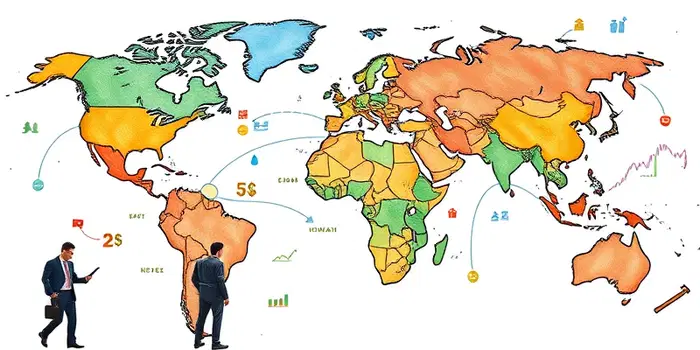
Building a truly diversified portfolio means looking past familiar horizons and embracing the opportunities of the wider world. In today’s interconnected economy, international investing is not merely a bet on foreign markets—it is a deliberate approach to strengthen and stabilize your long-term financial future.
By distributing capital across multiple economies, currencies, interest-rate regimes, and regulatory environments, investors can craft portfolios that weather shocks and tap into diverse sources of economic growth.
A portfolio concentrated in one country may shine during favorable conditions but often hides vulnerabilities until a downturn strikes. Home bias—the tendency to favor domestic investments—can limit exposure to other cycles of innovation, valuation, and demographic expansion.
International allocation offers a counterbalance, helping investors reduce dependence on a single market and build resilience against localized recessions, political upheaval, or currency crises.
Global markets are commonly divided into three tiers: developed, emerging, and frontier. Each category carries its own risk-return profile, liquidity considerations, and growth drivers.
Developed markets typically feature established legal institutions and robust liquidity, offering stability and reliable dividends. By contrast, emerging markets drive growth through urbanization, digital adoption, and demographic shifts but demand tolerance for currency fluctuations can enhance returns and sudden policy changes.
Frontier markets, while smaller and less liquid, provide early access to nascent economic engines—appropriate for a modest satellite allocation rather than a portfolio core.
International equities can be accessed through index funds, ETFs, mutual funds, ADRs, or direct listings. For fixed income, investors may choose hard-currency sovereign debt for credit stability or local-currency bonds to capture potential currency appreciation.
Real estate and infrastructure funds offer tangible assets and regular income streams, yet remain sensitive to local regulation and interest rates. Commodities provide a pure play on global supply and demand, often serving as an inflation hedge and crisis diversifier.
Introducing foreign assets brings new dimensions of risk: political, regulatory, liquidity, and tax considerations vary widely across jurisdictions. Currency exposure can both amplify returns and generate volatility independent of underlying fundamentals.
Hedging currency risk involves tools such as forward contracts and currency-hedged ETFs, which aim to neutralize fluctuations but at an added cost. Alternatively, a portion of unhedged exposure can serve as a hedge against weakness in the home currency, enhancing long-term diversification.
A thoughtful allocation framework begins with a clear target mix across regions and asset classes. Many investors adopt a baseline like 60% global equities, 30% bonds, and 10% alternatives, then overlay regional weights such as 50% domestic, 30% developed ex-U.S., and 20% emerging markets.
Regular rebalancing—semiannual or annual—ensures you sell portions of outperforming assets and buy underweights, maintaining alignment with your risk profile. This disciplined approach harnesses volatility, forcing a buy-low, sell-high discipline across borders.
Follow these steps to integrate international exposure effectively:
In the current 2026 landscape, research shows a growing valuation gap between expensive U.S. large-cap growth stocks and more attractively priced international equities. Emerging-market bond funds have recorded significant inflows—approximately $30.9 billion of inflows in 2025 and $17.7 billion year-to-date in 2026—underscoring shifting sentiment.
These trends are not a guarantee of future outperformance but a reminder that markets cycle in and out of favor. A globally diversified portfolio thrives by capturing disparate cycles rather than relying on one economy’s headline returns.
By thoughtfully combining region, sector, and asset-class exposures, investors can unlock new growth drivers—semiconductors in Asia, luxury goods in Europe, renewable energy in Latin America, and infrastructure in Africa—while maintaining balance through bonds and alternatives.
Ultimately, global investing is both an intellectual journey and a practical strategy. It requires research, discipline, and a willingness to look beyond home turf in exchange for dynamic regional allocation strategies that stand the test of shifting markets.
Embracing the world’s markets can transform risk into opportunity, volatility into discipline, and uncertainty into a broader canvas for growth.
References