Search
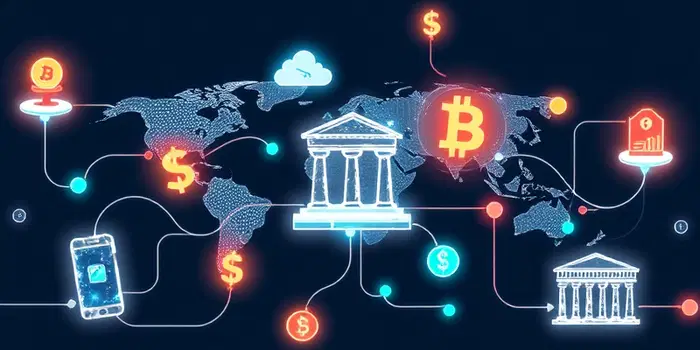
From bustling bank branches to the palm of your hand, finance is undergoing a profound metamorphosis. Fintech is not merely about replacing banks with apps—it represents a digital, platform-based, data-driven, real-time ecosystem that brings together banks, technology firms, retailers, insurers, regulators, and customers in a single, convergent space.
In this article, we explore the origins of fintech, quantify its scale, examine its role in expanding financial inclusion, delve into the innovations driving digital payments, and look ahead to the partnerships and platforms that will define finance in the years to come.
Financial technology, or fintech, leverages software, mobile devices, cloud infrastructure, artificial intelligence, and secure networks to deliver or improve financial services. Its scope spans consumer-facing services—neobanks, digital wallets, peer-to-peer transfers—and financial infrastructure such as payment rails, fraud detection, APIs, and compliance tools.
Fintech innovation includes independent startups, traditional banks modernizing their core systems, technology giants entering payments or lending, telecom operators offering mobile money, and governments building national digital-payment infrastructure. This breadth underscores fintech’s role as an ecosystem, not just a collection of apps.
McKinsey’s 2025 analysis estimates that the global fintech sector generated approximately $650 billion in revenue, growing at roughly 21% year-over-year and outpacing the broader financial-services industry by nearly four times. North America alone contributed $310 billion, while the payments vertical accounted for $250 billion.
Other research firms offer different figures, reflecting varied definitions—company revenue, technology spending, transaction value, or total addressable market. To contextualize these metrics, consider the following comparison:
These figures are not contradictory but underscore different focal points. McKinsey’s revenue estimate highlights the economic scale of fintech companies, while the market-value projections illustrate long-term growth potential in transaction value and adoption.
One of fintech’s most profound impacts is expanding access to financial services for the unbanked and underbanked. The World Bank reported that 79% of adults globally owned a financial account in 2024, up from 74% in 2021. In low- and middle-income economies, 61% of adults made or received a digital payment, a jump of 27 percentage points since 2014.
Digital payment records help lenders assess creditworthiness without relying on traditional credit histories. Mobile phones enable remote account opening and instant transactions, expanding access to financial services globally. The IMF found that digital financial transactions per adult in developing economies rose from 55 in 2017 to 251 in 2024.
These limitations show that while fintech is a powerful inclusion tool, it is not an automatic solution to inequality. Policymakers, industry leaders, and NGOs must collaborate to improve infrastructure, reduce costs, and build trust.
Payments lie at the heart of the fintech revolution, reshaping consumer and business expectations around speed, cost, and convenience. Innovations include contactless cards, mobile wallets, QR-code payments, real-time account-to-account transfers, digital remittances, merchant platforms, buy-now-pay-later services, cross-border networks, and blockchain-based settlement.
Real-time payment systems enable near-instant transfers, improving cash flow for small businesses, facilitating faster government disbursements, and reducing reliance on cash. However, they also heighten fraud risk, as the window for reversing unauthorized transfers narrows dramatically.
Neobanks—digital-first institutions without branch networks—offer mobile account opening, instant notifications, integrated budgeting tools, low-fee foreign exchange, and automated lending. Their agility allows designing a seamless user experience on mobile devices, challenging traditional banks to innovate or partner.
Open banking and open finance frameworks, powered by secure APIs, enable customers to share data with authorized third parties for services like account aggregation, personalized budgeting, and automated savings. This convergence of banks and tech firms fosters competition, drives product innovation, and ultimately benefits consumers with more choice and better pricing.
Looking ahead, embedded finance—where non-financial platforms integrate banking and payments—and regtech solutions for automated compliance will further blur industry boundaries. Collaboration between regulators, incumbents, and startups is essential to ensure stability, consumer protection, and continued innovation.
As fintech matures, its true promise lies not in technology for its own sake but in creating more inclusive, efficient, and transparent financial systems. By harnessing the strengths of diverse stakeholders and focusing on real-world needs, the fintech revolution can empower individuals and communities, drive economic growth, and unlock a new era of financial opportunity.
References