Search
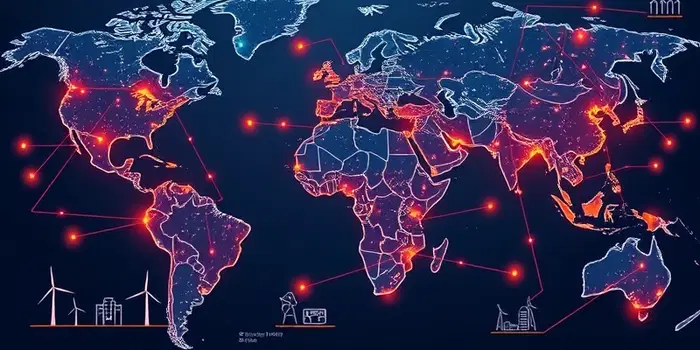
In 2026, emerging markets present a landscape that few can call straightforward. Investors must acknowledge that opportunities are highly uneven rather than universally bullish. While the global narrative often paints all developing economies with the same brush, the reality is far more complex. Some regions thrive on technology exports and reforms, while others grapple with energy-driven costs, geopolitical tensions, and supply-chain bottlenecks.
Against this backdrop, we see resilient technology-led growth with slower aggregate expansion shaping a unique investment environment. Understanding where dynamism meets durable fundamentals is key to identifying sectors that can outperform despite a more challenging macro backdrop.
Headline figures often conceal the true dispersion of performance. Behind the average growth forecast for emerging markets lies a tapestry of winners and laggards. Recognizing these divergences allows investors to allocate capital more effectively and avoid the pitfalls of broad-brush strategies.
According to the latest projections:
These statistics hide major differences between regions and sectors. Technology-exporting economies and reformers may surge ahead, while commodity importers and highly indebted countries could struggle.
Inflation is on a downtrend but remains susceptible to energy and geopolitical shocks. With global headline inflation expected to decline from 4.1% in 2025 to 3.8% in 2026, central banks face a delicate balance. Lower overall price growth could pave the way for interest-rate cuts, yet elevated energy costs pose upside risks.
Trade volumes are set to grow more slowly, shifting the paradigm from globalization to reconfiguration. Companies and governments alike prioritize supply-chain diversification and advanced manufacturing to mitigate disruptions. Strategies such as friend-shoring and regional hubs are gaining traction, reshaping patterns of investment and trade.
Few themes shine brighter than AI infrastructure and semiconductors. The surge in data-center construction and cloud computing has created unprecedented demand for chips and related equipment. Emerging markets that can supply components or host advanced manufacturing facilities stand to benefit disproportionately.
To identify durable AI-related opportunities:
Investors should evaluate capacity expansion plans, local regulatory support, and potential export controls. Understanding the full value chain—from raw materials to end-user applications—can uncover high-conviction investments.
Geopolitical competition and tariff uncertainty are driving companies to build resilience by relocating or adding production lines outside established hubs. Markets with reliable infrastructure, stable policy frameworks, and competitive labor costs are in high demand.
Incentives that make certain countries stand out include:
These factors contribute to an environment where supply-chain diversification and advanced manufacturing can flourish, unlocking new growth engines in automotive, electronics, and pharmaceuticals.
Energy remains both a cyclical risk and a structural opportunity. Higher oil and gas prices can strain import-dependent economies even as they boost exporters’ revenues. At the same time, energy security concerns are accelerating investment in a spectrum of technologies—from natural gas and LNG to solar, wind, and grid modernization.
Projects that ensure reliable and affordable electricity for growth will be at the forefront. These include transmission upgrades, battery storage deployments, and diversified power-generation portfolios combining renewables, hydroelectricity, and nuclear where feasible.
Moreover, the energy transition elevates the importance of critical minerals. Copper, aluminum, lithium, nickel, and cobalt will underpin the electrification of transport and industry. Shifting from mere extraction to local processing and value-added manufacturing can create multiplier effects across emerging economies.
The revolution in mobile connectivity and digital identity platforms is redefining access to financial services. In markets where traditional banking infrastructure is limited, mobile wallets, instant-payment systems, and digital lending platforms bridge the gap for millions of consumers and small businesses.
Successful ventures often feature a blend of high smartphone penetration, supportive regulation, and partnerships with established banks or telecom operators. Fintech innovators that tailor solutions to local needs—such as credit scoring based on transaction data or microinsurance for informal workers—are creating significant social and economic value.
In conclusion, emerging-market opportunities in 2026 will reward investors who look beyond averages and focus on sectors and regions with structural tailwinds. By aligning capital with strategic role in new supply chains and understanding the nuances of each market, one can harness the potential of this dynamic, uneven landscape. Embracing thematic clarity and rigorous analysis will transform global challenges into pathways for growth and innovation.
References