Search
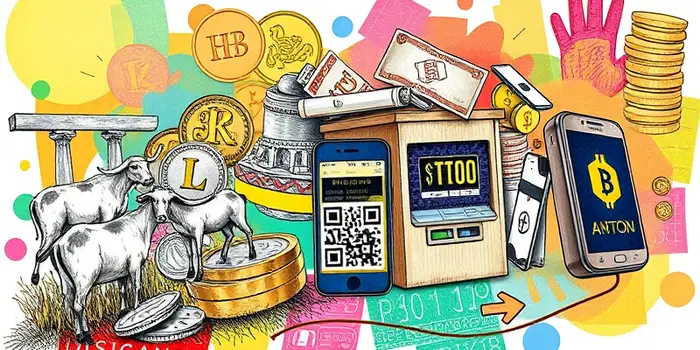
The way we exchange value has transformed dramatically over millennia. From simple barter to complex blockchain, each innovation shaped economies and societies in profound ways. By understanding this journey, we see how new ideas build on the old and why cash still endures alongside digital systems.
This article explores five major shifts and reveals how physical instruments such as coins evolved into digital, embedded and programmable payment systems. We’ll examine the technologies, the behaviors they changed, and the power they redistributed among banks, tech companies, merchants and governments.
The transformation of payments can be framed around five pivotal transitions. Each stage added layers of abstraction, trust and convenience, while also introducing new risks and challenges.
In ancient times, people exchanged goods—grain for livestock or shells for cloth—in systems without standardized money. Trust was localized and subjective, built on reputation and relationships. This model worked for small communities but was impractical for long-distance trade.
The introduction of metal coins around 650 BCE in Lydia (modern-day Türkiye) revolutionized commerce. Coins were durable, portable and divisible. Official markings guaranteed weight and purity, reducing disputes and enabling governments to levy taxes and fund armies. At this stage, money wasn’t just an object of value; it was a symbol of centralized authority and trust.
Carrying large quantities of metal coins became risky and cumbersome. In China, merchants began using paper receipts representing stored metal, which evolved into government-issued banknotes. Europeans later adopted banknotes tied to gold reserves and checks that instructed banks to transfer funds on someone’s behalf.
Checks and bills of exchange introduced deferred settlement, written authorization and verification processes. They separated payment authorization from the physical movement of cash. With paper instruments, people accepted a trust the issuer accept value rather than intrinsic metal content. This concept laid the groundwork for modern digital balances.
The 20th century saw the first telegraph-based wire transfers in the 1870s and Western Union’s money-transfer service. By 1910, central banks used telegraph networks for interbank transfers. This period proved that money can move electronically even when no coins or notes change hands.
In the 1950s, charge cards and credit cards emerged. Diners Club and American Express introduced centralized billing and payment processing. Bank of America’s credit card in 1958 evolved into the Visa network. Consumers could buy now and pay later; merchants accepted cards with confidence, and banks earned interchange fees.
The late 1960s and early 1970s brought ATMs and Automated Clearing House (ACH) systems. ATMs extended banking hours; ACH automated payroll, direct debits and batch transfers. These developments made electronic banking routine and showed how infrastructure (rails) and instruments (cards, account numbers) work together.
The rise of the internet in the 1990s detached payments from physical terminals. Customers entered card details on websites; gateways and fraud-screening tools emerged. Two-factor authentication and digital identity systems improved security, though new threats also appeared.
Mobile payments gained traction with SMS-based vending machine purchases in Finland in 1997. Smartphones later combined connectivity, NFC, cameras and biometrics. QR-code payments, tokenization and mobile wallets offered convenience and security. Consumers now carried payment capabilities in their pockets rather than their wallets.
Digital wallets became a user interface and identity layer over multiple rails. They store cards, bank accounts, buy-now-pay-later plans and loyalty credentials. By 2025, digital wallets accounted for over 50% of global e-commerce transactions and a third of in-store spending in many markets.
Today’s frontier is making payments invisible, real-time and programmable. Instant-payment infrastructures allow funds to clear in seconds. APIs enable platforms and apps to embed payments directly into their services—ride-hailing, delivery, marketplaces and connected cars.
Blockchain networks and smart contracts promise self-executing transactions with integrated escrow and enforcement. Central banks are exploring digital currencies that could change how monetary policy and financial inclusion operate. Artificial-intelligence fraud detection adapts in real time.
This era is defined by new payment rails coexist and change consumer behavior and by the idea that invisible, real-time and programmable payments can automate complex flows with minimal human intervention.
While digital payments grow rapidly, cash is declining but not disappearing. It remains vital for privacy, resilience and people without digital access. The future will be a hybrid ecosystem in which physical and digital methods coexist, each serving specific use cases.
Policymakers, banks, tech companies and merchants will compete and collaborate over rails, identities and data. The goal is to deliver faster, cheaper and more inclusive payment experiences without sacrificing security or privacy. As history shows, each innovation builds on the last, and no single method eliminates all others.
By understanding this transformation—from barter to blockchain—we can better navigate the next wave of change. The journey from cash to code is ongoing, and we all have a stake in shaping a payment system that serves everyone, everywhere.
References