Search
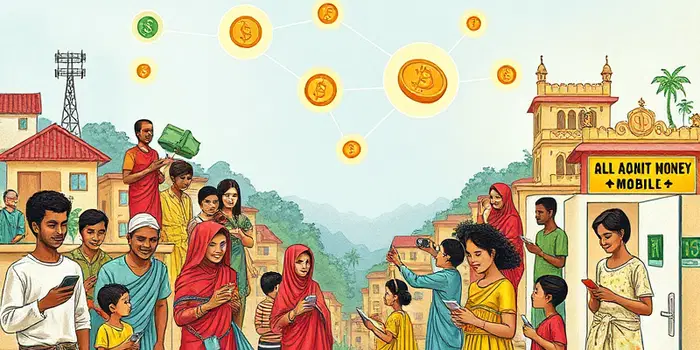
For decades, traditional banking relied on physical branches, paperwork, and long journeys to access financial services. Today, a revolutionary shift is underway. Mobile banking and mobile money have moved financial access from a place-based model centered on bank branches to an infrastructure-based model delivered through mobile phones, apps, agents, and networks. This transformation is not simply about digitizing existing services. In many low- and middle-income markets, it is creating a financial infrastructure where conventional branches were expensive, limited, or absent.
With smartphones and feature phones alike, people can open and use accounts remotely, receive wages and government transfers, save formally, send and receive remittances, access credit, manage emergencies, and build transaction histories. Microentrepreneurs can operate more efficiently, and households can weather shocks with greater resilience. This article examines the scale, pathways, benefits, and challenges of mobile banking’s transformative power.
Recent data underscore the unprecedented reach of digital financial services. According to the World Bank’s Global Findex 2025, 79% of adults worldwide now hold a financial account, up from 51% in 2011. Nearly 1.3 billion adults remain unbanked, but 900 million of them already own a mobile phone and 530 million have smartphones. In other words, mobile connectivity is a powerful gateway to formal finance.
GSMA’s 2026 industry report reveals that mobile money reached 2.3 billion registered accounts in 2025, adding 268 million accounts in a single year. Active accounts—those used at least once in 30 days—rose 15% to 593 million, while global transaction value topped $2 trillion. Digital transactions per adult jumped from 55 in 2017 to 251 in 2024, according to the IMF’s Financial Access Survey.
Mobile financial services reduce barriers created by distance, limited branch networks, and high operating costs. By embedding transactions into everyday life, they unlock economic opportunities for previously excluded populations. Key transformation pathways include:
These pathways work together to expand access and build financial health. Savings tracked digitally can support investment and buffer households against shocks. Transaction histories can unlock credit for microenterprises. And remote accessibility empowers rural communities, migrants, and women facing mobility or social constraints.
Contrary to the phrase "branchless banking," mobile finance relies heavily on distributed agent networks. Agents—such as retail shops, pharmacies, fuel stations, and mobile-phone dealers—offer cash-in and cash-out services, registration support, and customer assistance. They physically connect digital money to tangible currency.
This hybrid model—phone access, network connectivity, digital platforms, and physical agents—ensures that cash remains usable even as digital balances grow. Agent reliability and cash availability are critical to sustaining user trust and service continuity.
Sub-Saharan Africa continues to lead in mobile-money adoption. Countries like Kenya, Tanzania, and Uganda showcase mobile wallets transforming daily transactions, from merchant payments to health insurance premium collection. In South Asia, India’s Unified Payments Interface (UPI) has catalyzed a surge in real-time mobile transfers among banks and fintech platforms.
Latin America is witnessing rapid growth in digital credit and savings through mobile channels, while Southeast Asia’s diverse ecosystems leverage super-apps to bundle payments, lending, insurance, and e-commerce. Though contexts vary, the underlying driver is the same: mobile technology fills gaps where branch networks are scarce or costly.
Despite remarkable progress, risks and barriers remain. Key policy considerations include:
Responsible product design must avoid hidden fees and discriminatory scoring. Regulators and industry must collaborate to ensure account ownership leads to real benefits, not just digital footprints. Public–private partnerships can drive agent network expansion, interoperability standards, and digital ID integration.
Mobile banking has reached a pivotal moment. The rapid scaling of accounts and transactions demonstrates strong market demand. Yet deeper financial resilience, broader inclusion, and sustainable business models require continued innovation and supportive policies.
To build on current success, stakeholders should focus on:
By staying true to the core principle of removing physical barriers, mobile financial services can deliver on their promise of universal access. As digital channels mature, they can deepen financial capability, transform informal economies into formal markets, and equip individuals and businesses with the tools to thrive in a digital age.
Mobile banking and mobile money are not just technological fads; they represent an enduring shift in how financial services are designed, delivered, and experienced. Embracing this transformation means building an inclusive digital ecosystem where no one is left waiting in line or left behind in the digital divide.
Ultimately, the power of mobile financial infrastructure lies in its capacity to connect people to opportunity—wherever they are. By harnessing the full potential of this infrastructure-based model, we can move beyond the branch and toward a future of resilient, inclusive, and dynamic financial systems.
References